
Sales and Reservations Team Training
Strengthen Your Team's Commercial Capability
For strategies to succeed, sales and reservations teams need both the right knowledge and the skill to apply it.
Even the best strategy stays on paper if the team applying it does not understand it. I take your sales and reservations teams through revenue management fundamentals, the logic behind pricing, and upsell technique. We work reservations communication and segment management through examples from your own daily operation. What remains is not a one-off session but lasting capability inside the organisation.
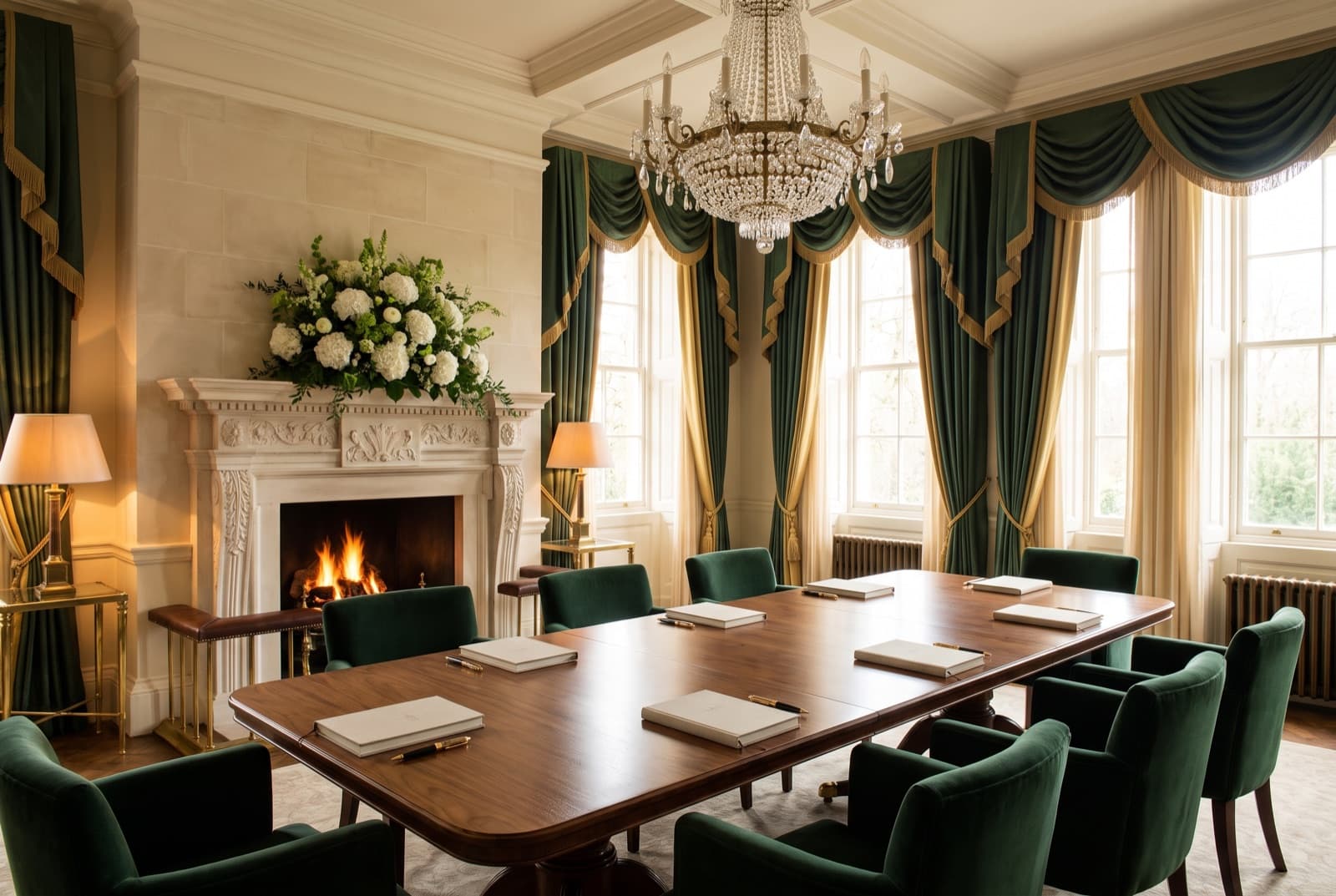
Training Topics
- Revenue management fundamentals
- Pricing logic
- Upsell techniques
- Reservations communication
- Segment management
What You Gain
- Stronger team performance
- Better sales results
- Lasting in-house expertise
Where does the strategy stall?
A revenue strategy can be right on paper and still go unapplied on the floor. The rate architecture is built, restrictions are defined, channels are in order; but if the person answering the phone does not know why the rate is what it is, the first objection is met with a discount. Strategy is applied not at the desk but in the moment someone speaks to a guest.
In most hotels the reservations team is treated as the last link in the commercial chain; it is in fact the first link where revenue actually happens. Two different answers to the same enquiry produce two different revenues — and the difference is directly tied to what the team knows.
A team short on commercial capability shows these symptoms:
- One figure is quoted when the rate is asked; no options are offered.
- The first reflex to an objection is a discount rather than explaining the product.
- Upgrades are never offered, or only by certain individuals.
- The number of missed calls and unanswered enquiries is unknown.
- Why the rate changes has never been explained to the team; the answer is “that's what the system gives us”.
- Group and corporate enquiries are quoted differently depending on who handles them.
- The reservations team's conversion rate has never been measured.
The subject of the training is not sales technique but the logic behind the rate. A team that knows why the rate is what it is finds something to defend when challenged. A team that does not, finds only a discount.
The backbone of the programme
The training is adapted to the hotel, but the backbone is built from these modules. The test for each is whether the team can do something differently the next day.
| MODULE | WHO ATTENDS | WHAT CHANGES NEXT DAY |
|---|---|---|
| Revenue management fundamentals | Reservations, sales, front office | Why the rate moves becomes clear |
| Reading the rate structure | Reservations, front office | The right rate is explained with the right condition |
| Reading the enquiry, offering options | Reservations | Options replace a single quoted figure |
| Handling objections | Reservations, sales | The product is explained instead of discounted |
| Upselling and cross-selling | Reservations, front office | The offer is made at the right moment |
| Group and corporate enquiries | Sales | Quotes rest on a displacement calculation |
| Channel and parity awareness | Reservations, sales | The guest's channel question is answered correctly |
| Reading measures and targets | The whole team | Each person sees their own contribution as a number |
Modules run as short sessions. Eight topics delivered in one day are not remembered the following week; a rhythm spread across weeks, with practice in between, is what lasts.
The reservations conversation is where conversion is built
A phone call or a direct enquiry is the hotel's highest-converting channel: the guest has already come to you. How that conversation is run determines more revenue than the channel commission does.
Reading the enquiry
Three things are asked before a rate is quoted: flexibility on dates, how many guests, and the reason for the stay. Knowing the reason allows the right room and the right package to be suggested; without it, only the cheapest rate gets quoted.
Options, not a single rate
In a conversation with three options, the decision stops being “yes or no” and becomes “which one”. Options are built on room type or condition: flexible cancellation, breakfast included, an upper category. The middle option is usually the one chosen most.
Handling the objection
“Expensive” is usually not an objection to the rate but a question about value. The right answer is not a discount but an explanation of what the rate includes. And where a discount is genuinely needed, it is not given for nothing: a longer stay, a non-refundable condition or different dates in return.
Closing
Every conversation should end with a clear step: the booking completed, or an option date given. Most conversations that end open never come back.
Seeing the enquiries that get away
Unanswered calls, emails replied to late and quotes never followed up are revenue losses that appear in no report. Unmeasured, they do not improve.
Reservations conversion
Conversion rate = Confirmed bookings ÷ Enquiries received × 100
the core measure of how much non-channel demand becomes revenue
How training lasts
The problem with one-off training is not that the content is wrong but that it is never tied to practice. The structure I build runs in this order:
- Baseline measurement — conversion rate, response time, number of upgrade offers and average rate achieved. This is the ground progress will be measured against.
- Adapting the content — examples are built from the hotel's own room types, its own rates and the enquiries it actually receives. Training on generic examples is not used the next day.
- Short sessions — each focused on one topic and leaving room to practise; a rhythm spread across weeks rather than an intensive half-day.
- Role practice — rehearsing conversations on real enquiries. The hardest part is learned here; an objection handled in theory is not handled on the floor.
- Follow-up on the floor — reviewing real conversations together after the training, with individual feedback.
- Repeating the measurement — the same numbers are taken again a few weeks later; where there is change it shows, and where there is none the reason gets discussed.
- A written framework — the conversation flow, the option structure and the objection responses stay in one document; new joiners read it.
- Refresher — a short repeat session a few months on. In hotels with high turnover this step is part of the programme.
What is the team measured on?
Behaviour that is not measured does not last. But the wrong measure is worse: a target watching booking volume alone pushes the team towards discounting. The measurement set is therefore built in balance.
- Conversion rate — how much of the incoming demand becomes a booking.
- Average rate achieved — shows whether conversion rose by cutting price.
- Upgrade offers and acceptances — where the additional revenue is tracked.
- Response time — how many hours before an enquiry is answered; it affects conversion directly.
- Enquiries lost — unanswered calls and quotes never followed up.
- Share of returning guests — whether a relationship is being built.
If an incentive scheme is built, two numbers must be targeted together: conversion and average rate. A bonus tied to only one of them breaks the other — and the break is usually noticed months later.
What you are left with
- A training programme adapted to the hotel — modules, durations and participant groups.
- A conversation framework — reading the enquiry, offering options, handling objections and closing, written down.
- An objection and response guide — the sentences heard most often and what to say to them.
- The upsell setup — which offer at which moment, at what price.
- A group and corporate quoting framework — the calculation a quote should rest on.
- A measurement set — conversion, average rate, response time, enquiries lost.
- A starter file for new joiners — the knowledge stays in the hotel when the team changes.
- A refresher plan — when the repeat session happens and what it covers.
The aim is not to put sales pressure on the team but to teach the reasoning behind the decision. A team that knows why the rate is what it is speaks more comfortably and discounts less.
Frequently Asked Questions
- How long does the training take?
- It varies with the hotel's needs and team size; I run it as short, hands-on sessions. The aim is less theory and more skills the team can apply the next day.
- Is the training lasting, or forgotten?
- It isn't a one-off presentation; we work through examples from your own daily operation, leaving lasting knowledge and a sales culture inside the organisation.
- Which topics does it cover?
- Revenue management fundamentals, pricing logic, upsell techniques, reservations communication and segment management. The content is adapted to the hotel's real situation.
- Who should attend?
- The reservations team is the core; sales and front office join too, because the rate question reaches all three. It matters that whoever is responsible for revenue attends at least one session — most of the team's questions are about how the rate is set.
- How do we measure the effect of the training?
- Four numbers are taken at the start: conversion rate, average rate achieved, number of upgrade offers and response time. The same numbers are measured again a few weeks later. Where there is change it shows; where there is none, we discuss the reason together.
- Our team turns over often — is the training wasted?
- That is exactly why the programme is more than a set of sessions. The conversation framework, the objection guide and a starter file for new joiners stay in the hotel in writing. People change, the method remains; the refresher session is planned for the same reason.
- Should we build an incentive scheme?
- If you do, build it in balance. A bonus tied only to booking volume pushes the team towards discounts; one tied only to rate loses demand. Targeting conversion and average rate together points the scheme in the right direction. Sound measurement is the precondition.
- Can the training be run online?
- It can, and it is practical where the team is spread across properties. But the role practice and floor follow-up need to be face to face or live — objection handling, the hardest part, is only learned by rehearsing it.
Other services
- Revenue Management
- Dynamic Pricing
- Profitability Optimisation
- Growing Room Revenue
- E-Commerce and Distribution Management
- Hotel Feasibility and Investment Analysis
- Integrating Guest Experience With Revenue Strategy
- Performance Reporting and KPI Analysis
- Sales and CRM Systems Integration
- PMS Integrations
Not familiar with the terms? Revenue management glossary